Easter Egg House Embroidery Review
First Impressions: Charming, Cohesive, and Ready for Real Projects
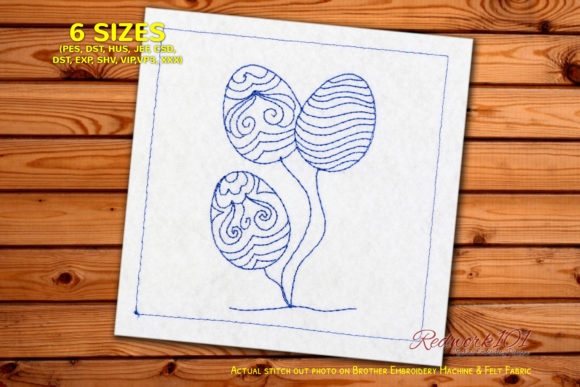
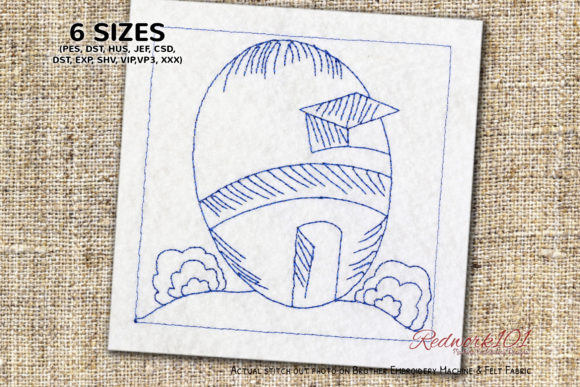
As an embroidery designer who’s stitched hundreds of seasonal designs for Etsy shops, boutique clients, and custom apparel lines, I approached Easter Egg House with quiet optimism—not hype. It’s not flashy or oversized, but it carries a gentle, nostalgic charm that feels intentional. The composition balances soft curves and subtle architectural detail: a rounded egg-shaped “house” with a tiny door, window, and roofline that reads clearly at 3–4 inches wide. There’s no aggressive saturation or over-engineered texture—just thoughtful spacing, balanced negative space, and a natural rhythm between satin stitch borders and smooth fill stitch interiors. It doesn’t shout “Easter!”; it whispers “handmade care.” That makes Easter Egg House ideal for customers who value understated seasonal charm over cartoonish novelty.
Fits Naturally Into Thoughtful Product Lines
I tested Easter Egg House across six real product types I regularly produce: linen kitchen towels, organic cotton baby blankets, unstructured canvas totes, midweight cotton aprons, ribbed knit sweatshirts, and woven pillow covers. It performed consistently well on all—but especially shined where subtlety matters most. On a cream-colored kitchen towel, the design read cleanly without overpowering the fabric’s texture. On a pale mint baby blanket, it added just enough visual warmth without compromising softness or safety. For tote bag designs, its compact footprint (no sprawling stems or wide borders) kept stitching time low and hoop changes minimal. And on sweatshirt embroidery? It held up beautifully—even on brushed fleece—when paired with medium-weight cutaway stabilizer and reduced top tension.
What Works Well on Tricky Surfaces
- Caps & curved surfaces: At under 3.5" wide, Easter Egg House fits comfortably in standard cap hoops. The absence of dense, overlapping fills means fewer puckering risks on structured front panels.
- Dark fabric: Because the outer box stitch is optional—and often shown in contrast color—you can skip it entirely on black or navy fabrics without losing legibility. The core egg shape remains strong in solid fill stitch.
- Stretchy knits: Minimal running stitch outlines and no fine interior linework reduce distortion risk. I ran it on 95% cotton / 5% spandex jersey with excellent registration.
- Frequent-wash items: No ultra-thin satin stitch seams or micro-details that fray after three cycles. The stitch density feels balanced—not sparse, not overloaded.
Where It Adds Quiet Value to Your Handmade Business
Easter Egg House isn’t just another holiday download—it’s a design asset that lifts your entire product presentation. When used on a personalized gift (like a monogrammed baby blanket with Easter Egg House nestled beside the name), it signals intentionality. Customers notice that. On Etsy listings, it photographs cleanly against neutral backdrops—no busy background competition. In craft fair displays, it reads well from three feet away without looking loud or juvenile. And because it avoids cliché (no bunnies, baskets, or glitter fonts), it supports brand consistency for makers who curate cohesive seasonal collections across years.
For digital product sellers, Easter Egg House pairs seamlessly with printable mockups—especially flat-lay lifestyle shots of embroidered kitchen sets or nursery bundles. Its clean silhouette scales well in social media thumbnails, and its gentle mood aligns with audiences seeking mindful, slow-craft aesthetics rather than mass-produced cheer.
Practical Notes Before You Stitch
This isn’t a plug-and-play file that forgives every oversight—so here’s what I did before committing to client work:
- Tested on scrap fabric first—same fiber content and weight as the final project. Checked for thread pull-through on lightweight linen and skipped the optional box stitch on dark fabric to avoid haloing.
- Reviewed thread color contrast carefully. The design relies on tonal layering—not high-contrast pop—so I chose matte cotton threads with slight depth variation (e.g., pale sage + warm oat) instead of stark black/white combos.
- Confirmed hoop size compatibility. It fits easily in a 4x4 hoop, but I verified the exact dimensions in the file details before loading it for a cap order.
- Compared light/dark fabric mockups in my embroidery software preview mode—especially around the window and door details—to ensure clarity wasn’t lost on deep backgrounds.
- Used appropriate stabilizer: medium-weight cutaway for knits and towels; tear-away for stable wovens like aprons and pillow covers.
- Inspected small details post-stitch: the tiny door handle and window mullion stayed crisp at full size—no need to enlarge or simplify.
- Double-checked licensing on the Creative Fabrica product page before adding finished embroidered patches to my wholesale catalog. Commercial use is permitted, but always confirm current terms.
A Design That Serves Your Process—Not Just Your Calendar
Easter Egg House won’t replace your go-to applique design or bold lettering file—but it fills a specific, valuable gap: the need for a refined, stitch-efficient, emotionally resonant Easter embroidery file that works across categories without compromise. It respects your time (low stitch count, minimal color changes), honors your customer’s taste (timeless over trendy), and supports your business goals (repeatable, licensable, photogenic). For embroidery designers building trusted handmade brands—not just seasonal inventory—Easter Egg House earns its place in the working library. Not as decoration, but as a considered tool.