Easter Balloons Lineart: A Thoughtful Embroidery Choice for Personalized Gifts
As an embroidery designer who’s stitched over 2,000 custom orders—from baby blankets to wedding keepsakes—I approached Easter Balloons Lineart with both curiosity and caution. This isn’t just another seasonal file; it’s a design that lands softly between playful and poetic. The first impression? Sweet, gentle, and unmistakably hand-drawn—like a delicate sketch lifted from a storybook. There’s no heavy fill stitching, no aggressive outlines—just clean, confident lineart that breathes. It feels modern enough for a minimalist nursery wall hanging, yet timeless enough for a linen heirloom pillow passed down through generations.
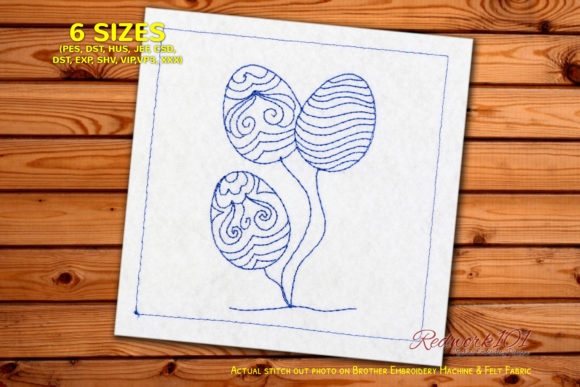
The charm lies in its restraint. Three floating Easter balloons—each with subtle variation in shape and string length—carry quiet personality without clutter. No bunnies, no eggs, no overt symbols—just the lightness of celebration. That makes Easter Balloons Lineart unusually versatile: it reads as Easter-themed without locking you into a single holiday moment. A customer ordering a baby embroidery piece for a spring birth? Perfect. A couple wanting a subtle “our first Easter together” wedding gift? Equally fitting. Even a small shop launching a neutral-toned Easter collection finds room here—no forced pastels, no visual overload.
For baby embroidery, this design shines on organic cotton blankets, muslin swaddles, and soft knit onesies—especially when paired with tonal thread (heather grey on oatmeal, pale sage on cream). On kitchen towels or aprons, it adds a whisper of seasonal warmth without competing with food photography or busy patterns. Pillow covers and tote bags gain instant handmade appeal: the lineart translates beautifully at 3–4 inches wide, holding clarity even after multiple washes—provided stabilizer and stitch density are managed well.
Wedding gift designers will appreciate how Easter Balloons Lineart avoids cliché. Stitch it onto ivory linen napkins, monogrammed tea towels, or a custom “Our Spring Beginning” pillow cover—it suggests new beginnings, not just Easter Sunday. For Etsy sellers listing digital embroidery files, this is a strong companion to more detailed designs: it balances your catalog, attracts buyers seeking simplicity, and pairs effortlessly with fonts for names or dates.
That said, thoughtful placement matters. Avoid using Easter Balloons Lineart on highly textured fabric like terry cloth bath towels—fine lines can blur or snag. Skip stretchy knits (think newborn bodysuits) unless you’re using lightweight cutaway stabilizer and reducing stitch speed. Curved surfaces—like the rounded edge of a ceramic mug sleeve or a contoured tote handle—require careful hooping and possibly slight digitizing tweaks to preserve line integrity. And while the design works on dark fabric, always test contrast: pale ecru thread on navy linen may read as elegant, but off-white on charcoal could vanish. A printable mockup helps—preview before stitching.
Where this design truly elevates your offering is in perceived value and emotional resonance. Because it’s lineart—not dense fills—it invites personalization: add a name below the balloons, tuck in a birth date, or pair it with a tiny cross or sprig of lavender for layered meaning. Customers don’t just buy a machine embroidery design—they buy intention. That intention shows up in product photography: crisp lineart photographs cleanly, scales well across social thumbnails, and encourages engagement (“Is that hand-drawn?” “Can I choose the thread color?”). That builds trust, especially for small shop owners and handmade sellers who rely on authenticity over flash.
Before stitching your first customer order, run these practical checks:
- Test on scrap fabric matching your final product—cotton twill for aprons, terry for towels, linen for pillow covers.
- Confirm thread color contrast under natural and artificial light; what looks clear on screen may soften on fabric.
- Review hoop size compatibility—does the full design fit comfortably within your standard hoop, or will you need re-hooping?
- Check stitch density: lineart should be light, but too sparse risks skipped stitches on dense weaves. Look for consistent line weight—no thinning or doubling.
- Use appropriate stabilizer: tear-away for stable wovens, cut-away for knits or loosely woven linens.
- Compare light and dark fabric mockups side-by-side—you’ll spot visibility gaps early.
- Inspect small details post-stitch: balloon strings, subtle curves, and connection points should remain legible, not fuzzy or broken.
- Verify commercial licensing before selling finished products—some versions include optional Box Stitch elements; confirm whether that outer box is part of the licensed design or purely decorative guidance.
One note about the Box Stitch mentioned in the product description: it appears to be a framing option, not core to the lineart itself. Most users—including Etsy sellers and gift shop owners—will likely skip it unless building a curated collection where uniform framing supports brand cohesion. If you do use it, remember: that outer box often uses a contrasting thread color, so plan your palette intentionally. Don’t let it compete—let it complement.
For craft fair vendors and baby product creators, Easter Balloons Lineart is a quiet standout. It doesn’t shout “Easter!”—it hums it softly, making it easy to merchandise year-round as part of a “spring collections” or “new beginnings” theme. Pair it with neutral packaging, simple tags, and warm copy—and watch how customers linger longer, ask deeper questions, and return for more.
In short: this isn’t just a digital embroidery file. It’s a storytelling tool. When stitched thoughtfully onto a personalized gift, Easter Balloons Lineart becomes a tiny vessel for memory—light, intentional, and quietly joyful. Whether you’re embroidering a blanket for a newborn, a towel for a newlywed kitchen, or a tote bag for a local florist’s spring launch, this design carries weight precisely because it feels so light.