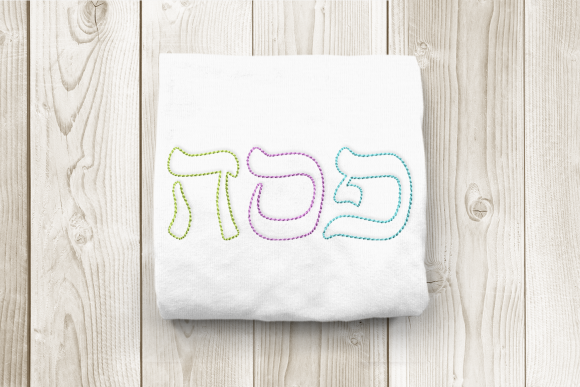
Linework Pesach Passover
A Seasonal Stitch That Speaks With Quiet Joy
As an embroidery designer who’s built holiday collections for over twelve years, my first impression of Linework Pesach Passover is immediate and warm: it’s festive without being loud, spiritual without being stiff, and modern without losing reverence. The Hebrew bubble letters are rendered in clean, confident linework—no heavy fills, no dense satin stitches—just graceful outlines that breathe on fabric. It feels both playful and meaningful, like a whispered blessing stitched into a spring morning. There’s nostalgia here, yes—but not the kind that leans on cliché. Instead, it’s fresh, intentional, and quietly elegant. For seasonal embroidery, that balance is gold.
Where This Design Shines in Real Holiday Product Lines
Linework Pesach Passover isn’t just a design—it’s a versatile anchor for thoughtful holiday product development. On lightweight cotton sweatshirts or unbleached canvas totes, it reads clearly at medium sizes and adds instant cultural warmth without overwhelming. For kitchen towel embroidery, its open linework avoids stiffness—even after repeated washing, the letters stay crisp and legible. As a pillow cover motif or embroidered patch, it pairs beautifully with linen, chambray, or oatmeal-toned fabrics, reinforcing that cozy-yet-refined Passover aesthetic shoppers seek for home and family.
Etsy sellers will appreciate how easily Linework Pesach Passover integrates into gift bundles: pair it with matching aprons and oven mitts for a “Seder Host Kit,” or layer it onto baby onesies and burp cloths for new families celebrating their first Passover. At craft fairs, it stands out on minimalist display boards—especially when shown across three fabric types (light, dark, textured) using realistic mockups. Social media previews perform well too: its clean lines translate sharply in Instagram carousels and printable promotional graphics, helping small shop products feel cohesive and intentional.
Smart Placement Matters—Here’s Where to Proceed Thoughtfully
Because Linework Pesach Passover relies on fine linework and distinct letter shapes, certain applications need extra attention. Avoid placing it on curved caps or stretchy knits unless you’ve tested stabilization thoroughly—the subtle curves of the Hebrew letters can distort under tension. Tiny hoop sizes (under 3” diameter) may struggle with the smallest file versions; always confirm actual stitch density before digitizing for baby items or ornaments. On thick terry cloth towels or heavy burlap table linens, consider slightly enlarging the design or adding light backing stabilizer to prevent thread sinking.
Dark fabric demands careful thread color testing—white or ecru works beautifully, but metallic thread? Not recommended. Its sheen competes with the design’s delicate line quality and risks catching light unevenly. And while the six size options offer flexibility, remember: smaller versions reduce legibility on busy backgrounds or textured weaves. If your finished product includes layered appliqué or additional text, leave ample breathing room—Linework Pesach Passover earns attention by standing alone.
Why This Design Strengthens Your Seasonal Appeal—and Your Customers’ Trust
Holiday embroidery buyers don’t just want symbols—they want resonance. Linework Pesach Passover delivers emotional authenticity. It signals care, cultural awareness, and craftsmanship—not mass production. That builds trust fast, especially among customers seeking personalized gifts or handmade gifts rooted in tradition. When shoppers see this design on a well-stitched pillow cover or embroidered patch, they read intentionality. They imagine gifting it—not as decoration, but as meaning made tangible.
For brand consistency, its clean aesthetic adapts seamlessly across product categories without needing redesign. Use the same thread palette (think soft sage, ivory, charcoal, and sky blue) across sweatshirt embroidery, tote bag design, and kitchen towel embroidery—and suddenly your entire Passover collection feels unified, premium, and shoppable. During peak holiday shopping periods, that visual recognition speeds decision-making. No confusion. No clutter. Just clarity, calm, and connection.
Practical Designer Notes Before You Stitch
- Always test thread colors on both light and dark fabric swatches—linework shows contrast differently than filled designs.
- Check stitch density before scaling down; overly tight lines on small sizes can cause puckering or breakage.
- Confirm hoop size compatibility—especially if offering multiple product formats (e.g., patches vs. apparel).
- Use appropriate stabilizer: cutaway for knits, tear-away for stable wovens, and light fusible for delicate linens.
- Create realistic mockups—not just white-background PNGs. Show it on actual fabric textures and lighting conditions.
- Review small details post-stitch: check letter openings (like the inner curve of the ח) for clean thread transitions.
- Plan matching color palettes across your full seasonal embroidery lineup—this design invites harmony, not isolation.
- Verify commercial licensing before selling finished products. As a digital embroidery file, its use in physical goods requires clear rights alignment.
Final Thought: A Design That Welcomes, Not Declares
In a season full of bold motifs and crowded shelves, Linework Pesach Passover offers something rare: quiet confidence. It doesn’t shout tradition—it holds space for it. That makes it ideal for small business owners building meaningful holiday collections, Etsy sellers differentiating their handmade gift offerings, and crafters stitching with purpose. Whether used on a child’s apron or a Seder table runner, it reminds us that the most powerful seasonal embroidery isn’t about scale—it’s about sincerity. And in that, Linework Pesach Passover delivers, stitch by thoughtful stitch.