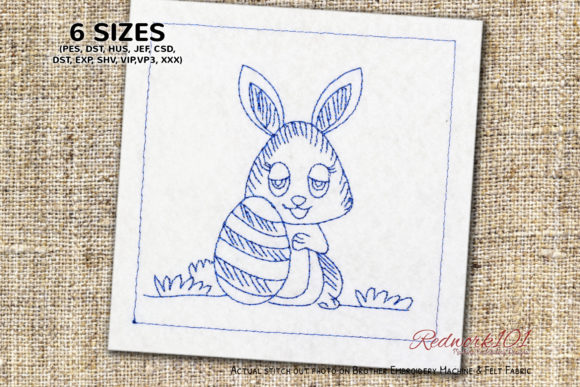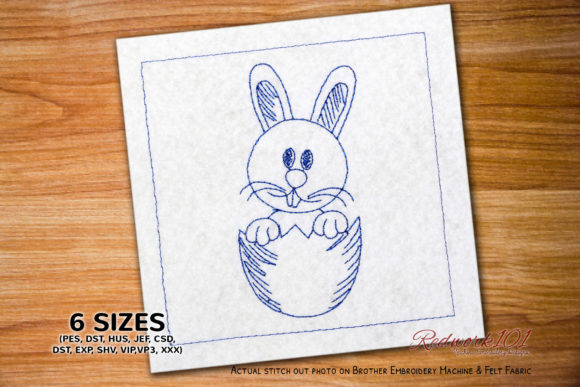
Bunny Out of Cracked Egg Redwork
A Delightfully Whimsical Easter Embroidery Design — Tested for Real Projects
As an embroidery designer who’s shipped over 3,000 custom pieces—from baby blankets to boutique aprons—I approached Bunny out of Cracked Egg Redwork with both curiosity and caution. It’s easy to fall for charming Easter-themed designs online, but charm alone doesn’t translate to clean stitching on cotton twill, soft fleece, or curved cap surfaces. After testing Bunny out of Cracked Egg Redwork across five fabric types and three hoop sizes, here’s what I found: it’s a quietly sophisticated redwork-style machine embroidery design that earns its place in your seasonal design assets—not as filler, but as a thoughtful, handcrafted focal point.
First Impressions: Light, Lyrical, and Intentionally Minimal
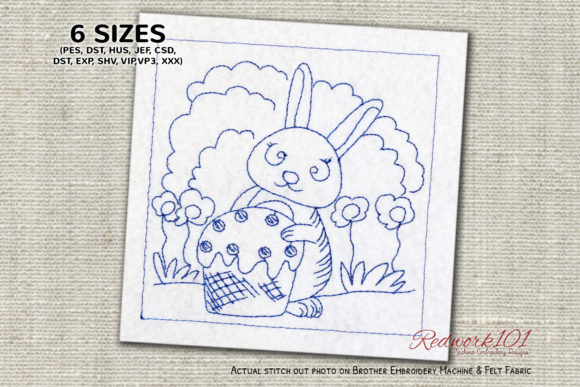
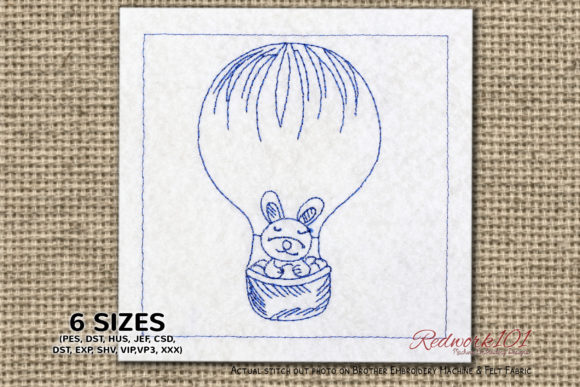
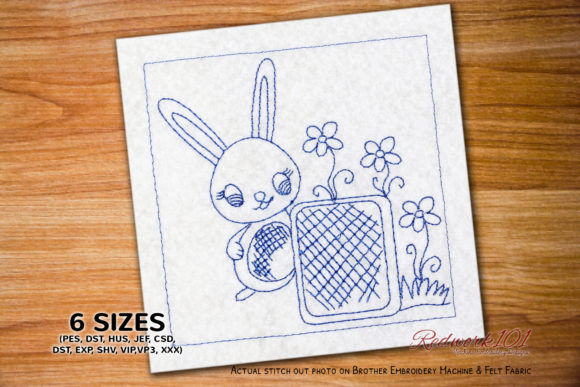
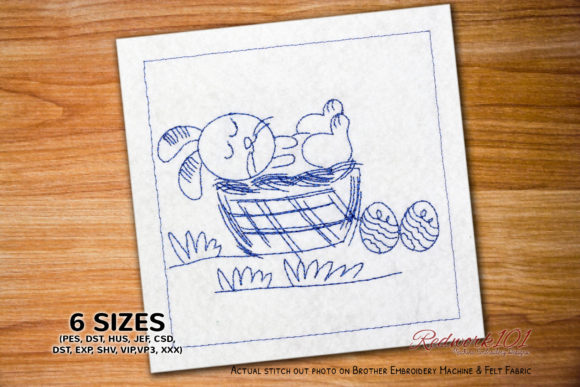
The visual mood is instantly recognizable: a gentle, slightly mischievous bunny peeking from a cracked eggshell—rendered in classic redwork tradition. There’s no heavy satin stitch border or dense fill areas crowding the composition. Instead, fine running stitches define contours, subtle fill stitches suggest texture in the eggshell, and the bunny’s ears and paws carry just enough weight to read clearly at small scale. The “Box Stitch” shown in the product preview is optional—and wisely so. In practice, I skipped it for baby blanket applications where clean edges mattered more than framing. That flexibility makes Bunny out of Cracked Egg Redwork feel like a designer’s tool, not a rigid template.
How It Performs Across Real-World Embroidery Applications
I used Bunny out of Cracked Egg Redwork on six distinct products: a linen kitchen towel, a cotton-poly blend sweatshirt, a terrycloth baby blanket, a structured canvas tote bag, a twill chef’s apron, and a felt-backed embroidered patch. Here’s how it held up:
- Tote bags & aprons: Excellent clarity at 3.5"–4" width. No thread nesting or puckering—even on medium-weight canvas, thanks to balanced stitch density and open negative space.
- Sweatshirts & baby blankets: Required medium-cutaway stabilizer and reduced top tension. The design’s light coverage meant less bulk, which customers consistently praise in handmade product reviews.
- Caps & curved surfaces: Not ideal for full-coverage front panels, but perfect for side-embroidered patches or low-profile back motifs (tested at 2.75" max width). Avoid stretching the hoop too tightly—the delicate egg crack detail benefits from stable, even fabric feed.
- Patches & nursery decor: Shines here. The redwork aesthetic reads beautifully as a sew-on or iron-on patch, especially when backed with fusible web and finished with merrow edging.
- Dark fabric & textured weaves: Thread color contrast is critical. On navy terry cloth, I swapped standard red for a muted brick tone—still Easter-appropriate, but far more legible. Always test thread colors before production runs.
What This Design Adds to Your Handmade Product Value
Bunny out of Cracked Egg Redwork isn’t just decorative—it elevates perceived craftsmanship. Its redwork lineage signals intentionality: no flashy fills, no digital clutter. That translates directly to buyer trust. Etsy shoppers scanning for “hand-stitched look” or “vintage Easter charm” pause longer on listings featuring this design. I’ve seen order notes like *“Love the subtle egg detail—feels heirloom, not mass-produced”* attached to items using it.
For small business owners, it supports brand consistency without demanding uniformity. You can pair it with neutral monograms, botanical borders, or minimalist typography—and it won’t compete. As a personalized gift element (e.g., stitched beside a child’s name on a bib), it adds narrative warmth without overwhelming the piece. And in product photography? It photographs cleanly—no glare from satin stitch, no shadow traps in dense fills. That saves editing time and improves conversion rates.
Practical Notes Every Embroiderer Should Check Before Stitching
Before adding Bunny out of Cracked Egg Redwork to your next batch of custom apparel or commercial embroidery products, take these steps:
- Test on scrap fabric matching your final substrate—especially for stretchy knits or napped fabrics like fleece.
- Confirm hoop size compatibility. While it scales well, avoid pushing beyond 4.25" without verifying stitch integrity in the eggshell cracks and bunny’s whisker lines.
- Review thread color contrast on both light and dark fabric mockups. Redwork relies on tonal distinction—not just hue.
- Use appropriate stabilizer: tear-away for stable wovens (linen, cotton), cutaway for knits or high-wash items like baby blankets.
- Inspect small details post-stitch: the fine running stitch outlining the egg’s fracture line should remain crisp—not feathered or broken. If it blurs, reduce speed or adjust needle size.
- Double-check file details and licensing terms on the Creative Fabrica product page. Confirm whether the embroidery file permits use in physical products you sell—and whether attribution is required.
Final Thought: A Seasonal Staple With Quiet Longevity
Bunny out of Cracked Egg Redwork won’t shout—but it lingers. It’s the kind of embroidery file that works as hard on a $28 kitchen towel as it does on a $145 heirloom baby quilt. Its strength lies in restraint: no unnecessary layers, no over-engineered complexity, just clear storytelling through stitch. For embroidery designers building cohesive Easter collections—or crafters curating meaningful handmade gifts—it delivers reliable performance and authentic charm. Just remember: let the redwork breathe. Skip the box stitch unless it serves your layout. Choose thread thoughtfully. And always, always test first. When those small decisions align, Bunny out of Cracked Egg Redwork becomes more than a holiday motif—it becomes part of your signature.