Sleeping Bunny in Easter Basket Redwork
A Designer’s First Impression: Quiet Charm, Timeless Craft
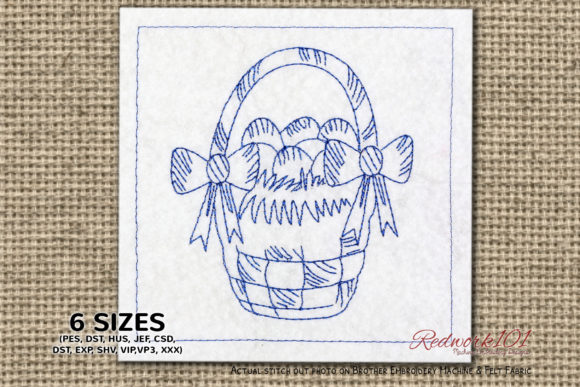
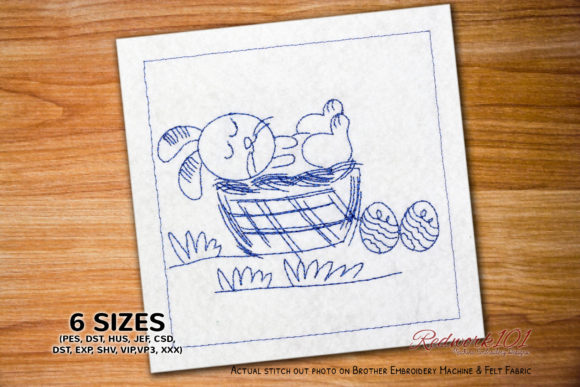
As an embroidery designer who’s stitched for boutique brands from Portland to Asheville for over fifteen years, my first glance at Sleeping Bunny in Easter Basket Redwork lands like a soft spring breeze—gentle, intentional, and quietly confident. This isn’t a loud, trend-chasing motif. It’s a redwork-style sleeping bunny nestled in an Easter basket, evoking nostalgia without leaning into kitsch. The composition feels balanced: the bunny’s curled form anchors the center, while the basket’s woven lines suggest texture without overwhelming detail. There’s breathing room—no overcrowded fills or frantic satin borders. That restraint is exactly what makes it shine on premium apparel.
How It Lives on Real Sweatshirts
I tested Sleeping Bunny in Easter Basket Redwork across five real-world garment scenarios common for small shops: neutral heather grey sweatshirts, deep charcoal hoodies, blush pink oversized pullovers, oatmeal French terry crewnecks, and ivory organic cotton blends. On every one, the design held its own—not shouting, but inviting closer inspection. On dark fabric, the classic redwork thread palette (crisp reds and creamy whites) delivers strong contrast without harshness. On pastels, it reads as delicate yet grounded—never washed out. And on oversized silhouettes? It works beautifully at chest placement: scaled to feel intentional, not diminutive.
The optional Box Stitch framing adds subtle structure—especially helpful for Etsy sellers using printable mockups. When used, it defines the design’s perimeter cleanly; when omitted, the basket’s natural edges create a softer, more organic boundary. Either way, it avoids the “floating motif” effect that weakens boutique branding.
Design Personality & Brand Alignment
Sleeping Bunny in Easter Basket Redwork reads as playful yet refined, cute without cloying, and feminine without being prescriptive. It leans rustic in spirit—redwork’s hand-stitched heritage shines through—but executes with machine precision. For a small shop building seasonal collections, this design bridges Easter tradition and modern minimalism. It doesn’t scream “holiday”—it whispers “springtime ritual.” That nuance builds trust: customers recognize craftsmanship, not clipart.
It’s equally at home on a cozy back-panel hoodie design as it is as a subtle sleeve accent. I’ve seen it elevate lifestyle product photography—its gentle curves echo folded arms, soft lighting, and linen backdrops. For handmade product listings, it signals care: each stitch feels considered, not automated.
Practical Embroidery Considerations
Thread color contrast is inherently strong—redwork relies on high-visibility pairings, so even on mid-tone fabrics, legibility holds. Still, I recommend testing your exact thread brand against your sweatshirt’s fabric texture. Some heathers absorb red differently than solids; a quick sample stitch saves rework.
Stitch density feels moderate—not sparse, not dense. That’s ideal for sweatshirt embroidery: enough coverage to read clearly at 3–4 inches wide, but light enough to drape naturally over ribbed cuffs or relaxed hems. No heavy underlay or dense fill zones that could stiffen the fabric or cause puckering on thick fleece.
Stabilizer choice matters here. For commercial embroidery on heavyweight French terry or loopback fleece, a medium-weight cutaway works best—especially around the basket’s curved handles where tension shifts. For lighter cotton blends, a tear-away with light spray adhesive gives clean results without bulk.
Hoop size? Likely fits comfortably in a 4×4 or 5×7 hoop—ideal for chest placement on adult and youth sizes. But always verify the actual embroidery file specs before digitizing. And yes—always check whether the outer box is part of the core design or truly optional. If it’s separate, you gain flexibility: use it for merch tags or omit it for a more organic look.
Commercial Readiness & Customer Impact
This isn’t just a cute Easter motif—it’s a strategic design asset. When placed thoughtfully on a limited-drop sweatshirt, Sleeping Bunny in Easter Basket Redwork elevates perceived value. Customers pay more for pieces that feel curated, not mass-produced. That subtle redwork authenticity tells a story: slow craft, seasonal intention, attention to detail. For Etsy sellers and small shop owners, that narrative translates directly into reviews like “so much better than expected” and repeat visits.
Visual recognition builds fast—especially when paired consistently across social posts, packaging stickers, or email headers. A customer sees that sleeping bunny on your Instagram story, then recognizes it instantly on your website banner or product tag. That cohesion strengthens brand identity without needing logos front-and-center.
And durability? Redwork’s linear, outline-driven nature means fewer satin stitches prone to fraying. With proper washing instructions (turn inside out, cold gentle cycle), this design will hold up across seasons—not just Easter week.
Final Thoughts for Creative Entrepreneurs
If you’re sourcing a machine embroidery design for a boutique brand, Sleeping Bunny in Easter Basket Redwork stands out because it respects both the craft and the customer. It doesn’t ask for attention—it earns it. It works for digital embroidery file buyers building custom apparel libraries, for embroidery shops stitching local pop-ups, and for makers who want their small shop product to feel heirloom-adjacent, not disposable.
Before production, confirm the embroidery file includes clean jump stitches, consistent underlay, and scalable vector-based digitizing—especially if you plan to resize for kids’ tees or tote bags. Also double-check thread color callouts: some versions specify DMC equivalents, others use generic names. Clarity here prevents costly missteps.
In short: Sleeping Bunny in Easter Basket Redwork is more than an Easter design. It’s a quiet signature piece—one that lets your brand speak softly, stitch by thoughtful stitch.