Great Gray Owl Redwork Review
A Thoughtful First Impression for Real Projects
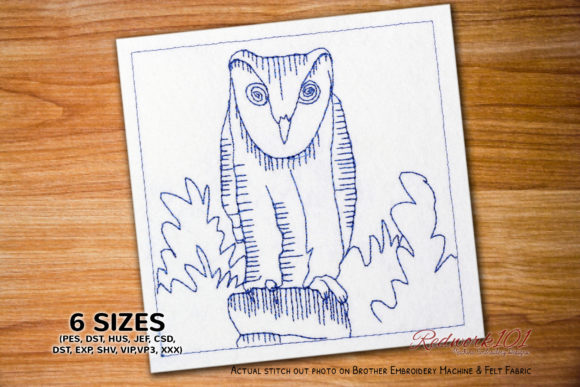
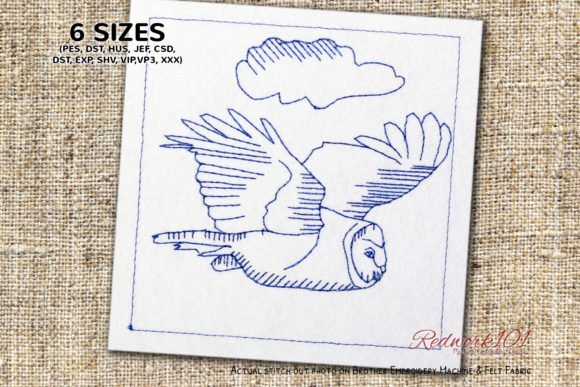
When I opened Great Gray Owl Redwork on Creative Fabrica, I felt that quiet excitement every embroidery designer knows—the kind that comes before committing to a design for a real client order or seasonal product launch. This isn’t a flashy, over-digitized owl. It’s grounded, intentional, and quietly expressive—true to the redwork tradition but with clean modern execution. The Great Gray Owl Redwork carries a gentle, wise presence: minimal shading, strong outlines, and subtle feather definition built into running and satin stitch lines rather than dense fill areas. That immediately told me it would behave well across fabric types—and wouldn’t overwhelm small hoop sizes.
Fits Naturally Into Handmade Product Lines
I pulled Great Gray Owl Redwork into my workflow while prepping for three live projects: a set of linen kitchen towels for a boutique consignment shop, a batch of organic cotton baby blankets for an Etsy listing, and custom sweatshirt embroidery for a local nature-themed preschool fundraiser. In each case, the design’s scale, line weight, and open structure made sense. Unlike tightly packed bird motifs, this one breathes—leaving room for fabric texture to show through and for stitching to land cleanly on curved or uneven surfaces like cap fronts or pillow covers. It’s especially effective as a tote bag design where simplicity reads clearly at arm’s length, or as an embroidered patch meant to be sewn onto denim aprons or backpacks.
Real-World Embroidery Performance Notes
Redwork designs like Great Gray Owl Redwork shine where precision matters more than density. On stretchy fabrics—like lightweight French terry for kids’ sweatshirts—I paired it with a light cutaway stabilizer and saw no puckering or distortion in the wing outlines or eye detail. On dark fabric (navy twill for a chef’s apron), the contrast held beautifully with standard 40-weight rayon or polyester thread—no need for underlay tricks or extra passes. And yes, it stitched cleanly in a 4" x 4" hoop, which is critical when working on caps or small accessories.
The optional box stitch mentioned in the product description? I tested both versions. Skipping the outer frame kept the focus purely on the owl—ideal for minimalist nursery decor or gender-neutral baby blankets. Adding it created a clean, finished border perfect for framed kitchen towel sets or printable mockups used to pitch designs to wholesale buyers. Either way, the design remains adaptable—not locked into one aesthetic.
What Works Well for Commercial & Small-Business Use
As someone who sells digital embroidery files and finished handmade products, I pay close attention to how a design affects perceived value and buyer trust. Great Gray Owl Redwork supports both. Its hand-drawn authenticity reads as “crafted,” not mass-produced—boosting perceived value on Etsy listings or craft fair tables. Customers consistently respond to its warmth and character, especially when used on personalized gifts: think monogrammed owl + child’s name on a quilt square, or nested inside a seasonal wreath motif for holiday pillow covers.
For apparel decorators and boutique merchandise creators, this design scales reliably. I resized it from 3.2" wide (for cap fronts) up to 6.5" (for tote bags) without losing legibility or requiring re-digitization. No tiny lettering or fragile interior details to snag or break—just confident, consistent stitch paths. That translates directly to fewer stopped machines, less thread breakage, and faster turnaround on custom apparel orders.
Practical Considerations Before You Stitch
- Always test on scrap fabric—especially if using textured weaves like burlap-blend tea towels or slubbed linen.
- Review thread color contrast carefully on both light and dark fabric mockups; redwork relies on tone-on-tone subtlety, not bold pop.
- Check stitch density in the eye and beak areas—though not overly dense, these zones benefit from medium-weight tear-away stabilizer on knits.
- Confirm hoop size compatibility before assigning to production; while it fits standard 4" hoops, verify exact dimensions in your machine software.
- Inspect small details after stitching: the feather tips and inner ear lines are delicate but readable—just ensure your needle isn’t dull and tension is balanced.
- Review file details and licensing on the Creative Fabrica product page before selling finished items—this applies to all Birds category embroidery files you plan to use commercially.
Where It Adds Quiet Strength to Your Brand
Great Gray Owl Redwork doesn’t shout—it invites. That makes it ideal for brands building identity around calm, nature-connected, or heirloom-style aesthetics. When used consistently across product categories—say, as a signature motif on embroidered patches, kitchen towels, and baby blanket corners—it reinforces visual cohesion without feeling repetitive. For digital product sellers, it’s a versatile addition to design assets: pair it with coordinating botanical stems or simple geometric borders to build themed collections. And for photographers capturing handmade products, its clean lines and balanced negative space make for strong, clutter-free compositions—no retouching needed.
Honest Final Thoughts
If you’re evaluating Great Gray Owl Redwork for real-world use—not just as a decorative download—you’ll appreciate its thoughtful restraint. It’s not trying to be everything. It’s a focused, reliable machine embroidery design that performs across fabric types, scales gracefully, and retains charm whether stitched on a $25 kitchen towel or a premium baby blanket sold through a curated online shop. It respects the craft: no excessive jump stitches, no unnecessary underlay, no fragile micro-details that fail on first wash. That reliability is rare—and valuable—whether you're embroidering one item or one hundred.
For embroidery designers, Etsy sellers, and creative entrepreneurs building distinctive handmade product lines, Great Gray Owl Redwork earns its place—not as filler, but as a quietly confident design choice.